New releases — March 2026
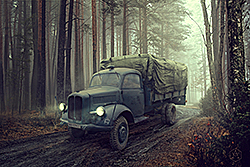
Scale 1:72 · #740 Borgward B 3000 S
The Borgward B3000 was a family of standardized 3-ton trucks produced by the German manufacturer Carl F.W. Borgward GmbH as a medium-duty truck in the Wehrmacht supply system.
Widely used from the Balkan campaign of 1941 onwards, the B3000 took part in logistics in various theaters of military operations, including the African and Northern Fronts. Luftwaffe units also used it for airfield support and its towing capabilities, which added to its versatility in cross-service transport roles.
By 1944, approximately 30,000 had been built, underlining the scale of the program which built up German logistics during the war. The Borgward B3000 complemented vehicles such as the Opel Blitz and the Mercedes L3000, providing modular logistics in motorized convoys.
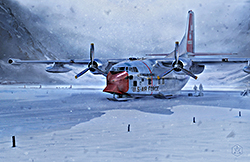
Scale 1:72 · #065 Fairchild C-123J Provider
The Fairchild C-123 Provider was an American military transport aircraft developed after World War II and produced by the Fairchild Aircraft Corporation.
It entered service with the US Air Force in 1955. In addition to the US Air Force, it was also actively operated by the Coast Guard, and by the Federal Aviation Administration in Alaska.
Fairchild J44 engines were additionally installed on the wing tips, and ski kits fitted to the landing gear, for use in the Arctic conditions of Alaska. This variant was designated the C-123J.
The Alaska Air National Guard used the C-123J to patrol the Arctic territory, and to deliver supplies and necessary equipment to polar stations.
New Releases of December 2025
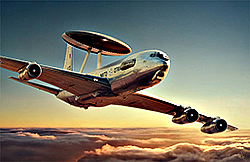
Scale 1:144
#345 Boeing E-3B Sentry AWACS
The first Boeing E-3 Sentry AWACS aircraft, developed by Boeing from the Boeing 707 airliner, was delivered in March 1977. The American AWACS early warning and control aircraft provides all-weather surveillance, command, control and communications and is used by the US Air Force, NATO, the French Air and Space Forces, the Royal Saudi Arabian Air Force and the Chilean Air Force. The E-3 has a distinctive rotating radar dome (rotodome) above the fuselage. Production ceased in 1992 after 68 aircraft were built.
New Releases of October 2025
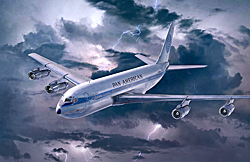
Scale 1:144
#338 Boeing 707-321
The Boeing 707 was an American airliner with four engines and a
narrow body fuselage. The prototype first flew in 1954, and series
production lasted from 1958 to 1979. Boeing then began to produce a
series of intercontinental transports to orders from the Pan American
airline. In the 1960s Pan Am was the world's most glamorous airline, and at the center of their success between 1963 and 1968 was the Boeing 707-321. The aircraft became the most famous airliner of its time.
The aircraft remained in service until the early 2000s in Africa,
Latin America and elsewhere... And also with John Travolta, the owner of N707JT (the last two letters of the registration number being the
initials of his name). Military and freight versions of the Boeing 707
still continue in service and will carry on flying until around 2040.
New Releases of May 2025
Scale 1:144
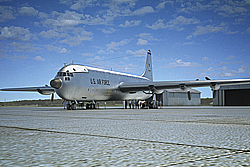
#351 Convair XC-99
The XC-99 was an American heavy transport aircraft derived from the B-36 strategic bomber. Its first flight took place in 1947, and its Air Force service lasted from 1950 to 1975. The plane was the largest transport aircraft of its time and could carry 400 fully equipped soldiers or 45 tons of cargo.
The XC-99 set several world records in its time, and it was also extensively used by the US Air Force during the Korean War. There was a project to build a transcontinental passenger plane on its basis, but this was canceled. The US Air Force did not issue further orders for the type, and the XC-99 remained a single prototype. Until the appearance of the C-5 Galaxy, it was the largest in its class.
Scale 1:35
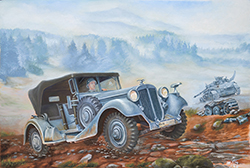
#825 Horch V8 Type 830-R
Horch 830R (Kfz.11) - German light army vehicle, developed from the Horch 830 civilian car in 1934. For the needs of the army, the basic design was greatly simplified, but the main structural elements were significantly strengthened in view of the requirements of the military.
From 1934 to 1937, a total of almost 4,500 units of this type were produced, which were widely used from the first days of World War II up to and including 1943, when the vast majority of them were lost in the roadless conditions of the Eastern Front. The Horch 830R is considered the first example of the Kubelwagen type of vehicle that was widely distributed in the German army during the war.

Scale 1:35
#824 Vomag Omnibus 7 OR 660
Vomag Omnibus 7 OR 660 – triple-axle omnibus, developed in the mid-1930s by the automobile firm Vogtlandische Maschinenfabric AG (VOMAG). It was originally planned as a bus for local transportation in large cities and also for mail delivery, however from the beginning of World War II, enormous numbers of all types of buses including the VOMAG 7 OR 660 were transferred to the army for the requirements of transportation of personnel. In total about 200 buses of this type were produced.
Scale 1:35
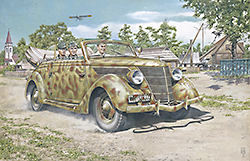
#820 Ford V8-G81 Cabriolet
The Ford V8 G81A was a German passenger car, created at a subsidiary of the American Ford concern in Germany in the late 1930s on the basis of the American Ford V8 car. Production lasted from 1938 to 1941, during which time they managed to produce more than 8 thousand vehicles of this type. With the outbreak of World War II, many Ford V8 G81As were requisitioned from private owners and transferred to military units.
Cars of this type were extensively used during the Blitzkrieg, as the countries of Europe had a wide network of good quality roads, but after the beginning of the Eastern campaign, the use of these vehicles turned out to be impractical due to the terrible state of road surfaces in the fall and spring, and overall the limited availability of any roads at all. In Germany, the Ford V8 G81A was used mainly as a police car until 1944. Based on the Ford V8 G81A, a number of different versions were created, including a convertible with an open top. These cars were mainly used in combat units as personal transports for middle-ranking officers.
Scale 1:35
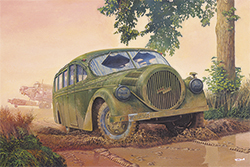
#823
Opel Blitzbus Ludewig "Aero" (WWII service)
The Opel Blitzbus Ludewig "Aero" (WWII service) was a German bus of the mid 1930's. It was built by the truck body workshop of Ludewig Brothers on the chassis of the well-known Opel Blitz 3 ton truck. The bus had rather elegant exterior lines, and was used as an express bus for passengers between cities, and also for propaganda purposes. After the beginning of the Second World War at least one such car was requisitioned by the army and was used on the Eastern Front as a transport for Wehrmacht officers.
Scale 1:32
#637
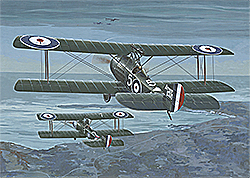
Sopwith 1½ Strutter Comic Fighter
Sopwith 1½ Strutter comic fighter - night fighter-interceptor, converted from the standard two-seat 1½ Strutter. A very limited number of this version served in the British Home Defence units, fighting against German raiders (Gotha bombers and R-planes) during late 1917 - early 1918. The reason for early withdrawal of this type from service was poor performance.
Scale 1:35
#822
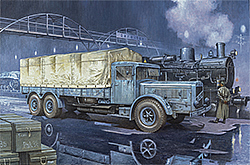
VOMAG 8LR LKW
WWII German Heavy Truck
The VOMAG 8LR is a German heavy truck, created in 1935 by the VOMAG automobile engineering company. In total, in the prewar years, 100 units of trucks of this type were produced, which were used in the middle of the country, first of all for the rapid dispatch of large cargoes all over the country through a branched network of autobahns. With the start of the Second World War, the VOMAG 8LR, like many other trucks, was requisitioning to the Wehrmacht, but their military service, especially in the conditions of the Soviet Union, was very short due to the complexity of the suspension design. The small number of these trucks, which was converted to equipment for equipment delivery to the troops, was used in the conditions of the Eastern Front until the middle of 1943.
Scale 1:144
#350
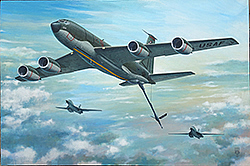
Boeing KC-135 Stratotanker
The Boeing KC-135 is a refueling aircraft created in 1956 by the Boeing Aircraft Company on the basis of the Boeing-367-80. The aircraft proved to be one of the most successful in its class and more than 600 were built, and its military service lasted a total of more than 60 years, during which time several engine and avionics upgrades took place. The KS-135 modification with the CFM F108 engine appeared in the late 1990s and turned out to be one of the last in the huge 135 family.
Aircraft of this type took an active part in all military conflicts starting with the Vietnam War. KS-135s were the fuel donor for almost every type of US Air Force aircraft, and their contribution to the overall military cause cannot be fully estimated. In 2019, the KS-135 was replaced by the more modern KS-46, and the KS-135 began to be decommissioned, transferring some of them to aviation museums. In addition to the US Air Force, they were operated in small quantities by the French Air Force and the Singapore Air Force.
Scale 1:32
#635
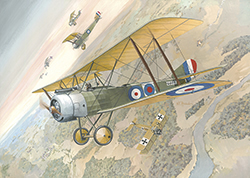
Sopwith 11/2 Strutter
Sopwith 11/2 Strutter – first British fighting plane equipped with synchronized machine gun. During World War I build in United Kingdom (1282 planes) and France (4797). 11/2 Strutter very quickly become obsolete but it used unitl the end of War by British, French’s
and American Air Forces. Aircraft widely exported 10 many countries (Russia,
Belgium, Japan, etc). One of the most well-known British ace, Raymond Collisshaw (60 victories in total) during Iate 1916 intensively fighting, flied with 11/2 Strutter.
Scale 1:32
#636
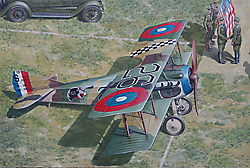
SPAD XIIIc1
SPAD XIIIc.1 – French fighter of the First World War, developed in 1917 by the SPAD company from the earlier highly successful SPAD VIIc.1. The new type differed from its predecessor in its slightly larger dimensions, the shape of the cowling and its control surfaces. Late-model aircraft had straightened wing tips, a new radiator grille, and differently shaped side louvres. In total, in 1917-1918, almost 8,000 fighters of this type were built, and used not only by the French Air Force, but also by other countries, such as Great Britain, the United States, and Italy.
Many famous aces, such as Georges Guynemer, Francesco Baracca and Eddie Rickenbacker, piloted this aircraft, gaining a significant number of their victories in the air with it. The front line service of the machine continued even into the first few years after the war, and the SPAD XIII was one of the most important fighter aircraft of the newly created US Air Force up to the 1920s.
Scale 1:35
#819
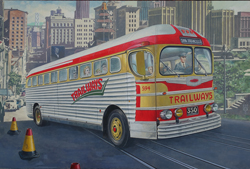
1947 PD-3751 Silversides Bus
The GMC PD3751 Silversides was an intercity bus, created in the mid-1930s by the Yellow Coach automobile company to the order of one of the largest passenger carriers, Greyhound Lines. The bus was a revolution in automobile construction, corrugated aluminum and polymer materials being widely used, and during development special attention was devoted to providing maximum comfort for passengers, since after the construction of a wide network of high-quality highways between all the cities of the country in the years of the Great Depression, railway passenger transportation nearly ended due to its inability to compete with fast auto connections. Series construction commenced from 1939 at the Pontiac West Assembly facility in Pontiac, Michigan, where General Motors had previously assembled pickup vehicles and trucks. In addition to Greyhound Lines, buses of this type were also used by other national carriers, such as Trailways Travels, which served mainly the Southern states. Silversides bus operations continued almost until the end of the 1950s, after which a large number of them were resold to third countries, mainly in Latin America. This bus is one of the classic symbols of the United States, on the same level as Ford cars and Boeing airliners, and personifies the significant technological progress that made this country great in the first half of the 20th century.
05.08.2022 New Releases of August 2022:
Scale 1:35
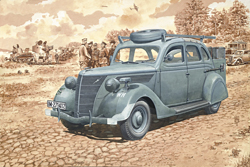
#818 Ford V8-G81A Funkkraftwagen
Ford V8-G81A Funkkraftwagen - specialized German communications vehicle, converted from the G81A car. In order to install the sizeable radio equipment, the car body was partly rebuilt, and fitted with radio coils, cables and other dedicated equipment. These machines were used primarily in radio field units and sometimes in Wehrmacht reconnaissance units. Despite the relatively small number of such vehicles, their operation was quite intensive and lasted almost until the end of World War II on both the Eastern and Western fronts.
Scale 1:72
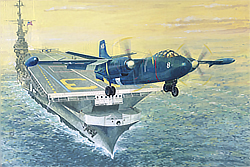
#063 North American AJ-1 Savage
The North American AJ-1 Savage was a United States carrier borne bomber designed in the 1940s. The aircraft's main task was to carry and deliver a nuclear weapon, which at that time, due to its size, had to be deployed by the aircraft near the target zone. Series production began in 1949 and continued until 1952, after which the AJ-2, a greatly improved version appeared. Due to frequent accidents during takeoff and landing from aircraft carriers, It was decided to use the AJ-1 mainly for training or as a bomber with conventional weapons, and only after the advent of the AJ-2 and elimination of shortcomings they were modified as the AJ-1 (Retrofitted) and operated again from deck carriers with nuclear weapons; and later after being retired from the bombing role, they were employed as air-to-air refuelers. The AJ-1 was based on aircraft carriers that were sent to the South-East Asia region after the start of the Korean conflict, but no aircraft of this type were involved in this war or afterwards. A total of 47 AJ-1 aircraft were built.
05.05.2022 New Releases of May 2022:
Scale 1:144
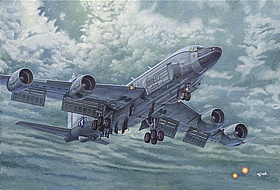
#349 Boeing RC-135V/W Rivet Joint
Meet our new release of May - #349 Boeing RC-135V/W Rivet Joint, scale 1:144. The painting for this model is special for us because this is the latest work painted for Roden by our talented artist Valery Grigorenko...
RC-135V/W - a specialized aircraft for airborne electronic reconnaissance, developed in the 1970s. The main tasks of the RC-135V and RC-135W are to identify sources of radio signal in the area of potential combat operations, collect information on land, sea and air targets, intercept radio communication between command posts and combat units, and monitor enemy air defenses. For this very specific work, the aircraft crew consists of 12 to 16 surveillance operators and analysts for the purpose of operational data collection. Usually the RC-135V and RC-135W perform tasks together with other reconnaissance aircraft such as the E-3 AWACS, transmitting all the collected information to it as a mobile command post through a special encrypted communication channel. The RC-135V and RC-135W have been in service with the US Air Force for over 40 years and are the main type used for these operations; and since 2013, three RC-135Ws have been adopted by the Royal Air Force of the United Kingdom.
Scale 1:144
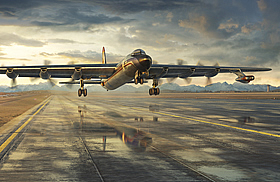
#348 Convair NB-36H Crusader
The Convair NB-36H Crusader was an American research aircraft built in 1955 based on the B-36H bomber to determine the possibility of installing a nuclear reactor and so remain airborne for a long time. The nuclear reactor was located in the rear of the bomber, and its operation was monitored via telemetry by specialists seated next to the crew in a special compartment protected by lead shielding.
In all, from 1955 to 1957, the NB-36H Crusader made 47 test sorties, during which the nuclear power plant was turned on only as an auxiliary unit. Due to numerous risks, the principal of which was the unresolved issue of significant contamination in the event of the crash of such an aircraft, the research program was terminated and all future projects involving this type of aircraft were considered dangerous and unpromising.